About the Artist
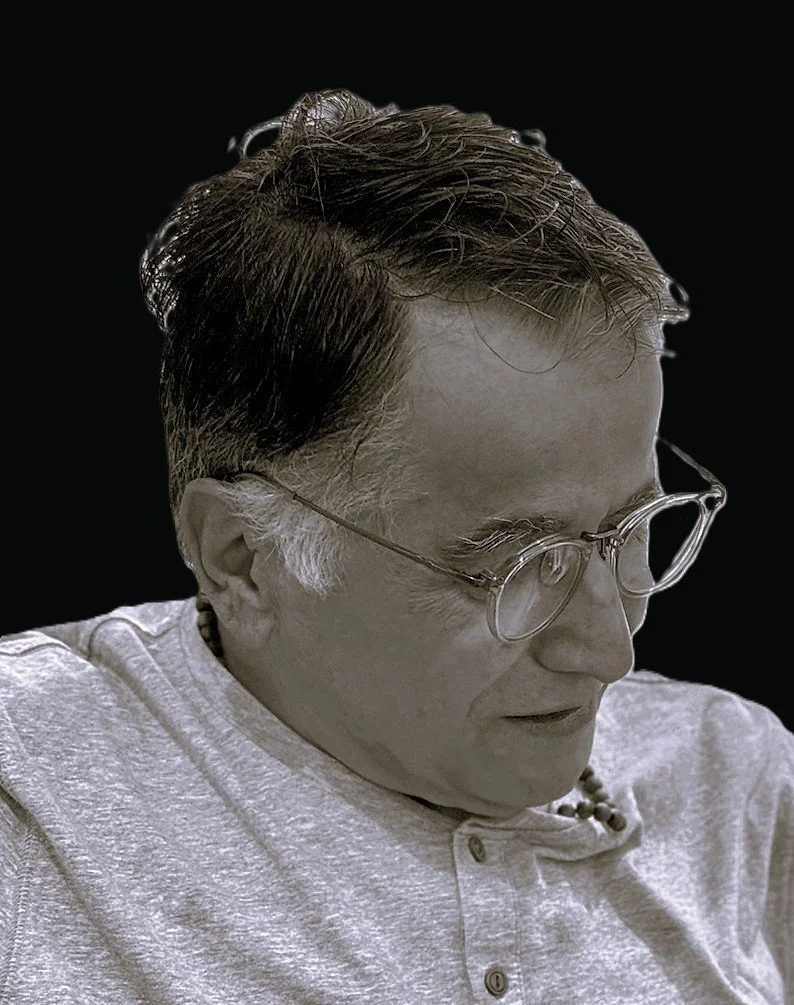
My work begins with the human body—both subject and structure—through which myth, power, history, memory, and intimacy are explored. Shaped by early material experimentation and an independent studio practice, I work across oil, hybrid pastel surfaces, graphite, and watercolor. Each medium becomes a field of inquiry into endurance: how the body persists within forces that exceed it. Through themes of mythic struggle, systemic pressure, historical memory, and relational care, the figure becomes a site where invisible tensions take form. Whether compressed, rising, fractured, or joined with others, the body remains the central language through which persistence, vulnerability, and meaning become visible.
-
My work begins with the body.
Across oil paintings, hybrid pastel surfaces, graphite drawings, and watercolor studies, the human figure serves as both subject and structure—a living architecture through which myth, power, history, memory, and intimacy are tested. I do not approach the body as mere anatomy, nor as mere narrative illustration. It is a site of inquiry. A vessel. A threshold where invisible forces become visible.
My practice was shaped early by necessity. In the early 1970s, without access to professional materials, I made my own oil paints from dry pigments and linseed oil, adjusting density and saturation by hand. I painted on standard and glossy-coated cardboard, learning through direct experimentation how oil oxidizes, how surface tension behaves, how absorption alters chroma, and how time alters both. What began as a limitation became education. The material itself became the teacher.
Even later, when working with traditional oil on canvas, my approach remained independent—formed not through academic doctrine but through disciplined experimentation and self-critique. I refined chromatic relationships, compositional balance, and structural clarity through repetition and revision. Many works were set aside, reconsidered, or rebuilt to achieve cohesion. Oil became not merely a medium, but a field of sustained inquiry into density, light, and endurance.
My pastel works emerged from a similar evolution. What began as preparatory sketches on textured cardboard gradually transformed into a hybrid technique: pastel unified through successive layers of clear sealer. The sealer binds pigment, deepens tonal range, and creates a surface that carries both the immediacy of drawing and the depth of painting. It is neither traditional pastel nor oil, but a synthesis—fragility stabilized, luminosity intensified.
Graphite on rough paper remains my most constant companion. Economical and portable, it allows immediacy without barriers. The mechanical pencil offers precision while preserving spontaneity. In graphite, thought and gesture meet directly. There is no delay between impulse and mark. This mobility has shaped the rhythm of my work—drawing as continuous reflection, as daily practice, as intimate negotiation between hand and idea.
Across these media runs a shared philosophical framework—a cartography of themes that guides the work without confining it.
In The Body as a Site of Meaning, myth and archetype—Sisyphus, the phoenix, the gladiator, the samurai—are not illustrations but structures for thinking. Heroism is redefined as persistence through fracture. Faith appears not as doctrine but as posture: kneeling, rising, folding inward. The body becomes a language for existential endurance—for bearing weight without certainty of resolution.
In Systems and Pressure, industrial grids, institutional architectures, arenas, and compartments shape the figure. Power is not theatrical; it is anatomical. It inscribes itself through repetition, surveillance, and containment. Modernity reveals its paradox—liberation entwined with subjugation. The body bends within geometry, yet does not dissolve.
In History as Psychic Aftermath, revolution and war are rendered not as spectacle but as atmosphere. History persists in the psyche, as residue carried in gesture and posture. Figures fragment or hover at thresholds between conviction and fear. These works resist verdicts. They hold moral complexity—memory without simplification, endurance without glorification.
And in Relation, Care, and Cultural Continuity, another force emerges: connection. Bodies merge into protective geometries; proximity becomes belonging. Calligraphic rhythm preserves memory through motion. Music, still life, and landscape become acts of survival. Even objects—a boat, a book, a flower—suggest renewal within fragility. Endurance here is relational rather than solitary. Meaning arises through shared presence.
Across all these frameworks, one question persists:
How does the human being endure—physically, ethically, spiritually—within forces that exceed it?Whether through the density of oil, the sealed luminosity of pastel, the immediacy of graphite, or the transparency of watercolor, I return to the same inquiry. The figure may be suspended, compressed, fractured, kneeling, rising, or merging. It may stand within myth, machinery, memory, or embrace. But it remains.
The body bears history.
The body negotiates power.
The body remembers.
The body connects.And through that endurance, meaning becomes visible.